How Do You Know When Poison Ivy Around Your Property Needs Professional Removal?
The clearest sign is a rash that keeps showing up after time in the same part of the yard, on people or pets, even though nobody remembers touching a vine. That usually means the plant is more established, or better hidden, than it looks. Watch for a few other patterns too, because each one changes how the removal has to be done.
- Hairy, rope-like vines climbing tree trunks or fence posts
- Shiny three-leaf clusters spreading through groundcover or mulch beds
- Recurring rashes after handling garden tools or gloves
- Rashes that show up after dogs or cats roam the yard
- New shoots returning in spots that were already pulled
Why Are the Hairy Vines on Tree Trunks So Hard to Get Rid Of?
Those hairy vines are old, woody stems, sometimes years old, anchored to the bark by dense aerial rootlets, and they carry the same urushiol oil as the leaves. The standard approach is to cut the vine a few inches above the soil and immediately treat the fresh stump with a concentrated systemic herbicide so it travels down into the root. The upper vine is left to die back in place for several weeks. Ripping it off living bark tears the tree and showers oily debris on whoever is pulling. Even a dead, leafless vine can stay hazardous to touch for years, so it gets bagged, never tossed on a brush pile.
Can You Just Mow Down Poison Ivy Spreading Through Groundcover or Mulch Beds?
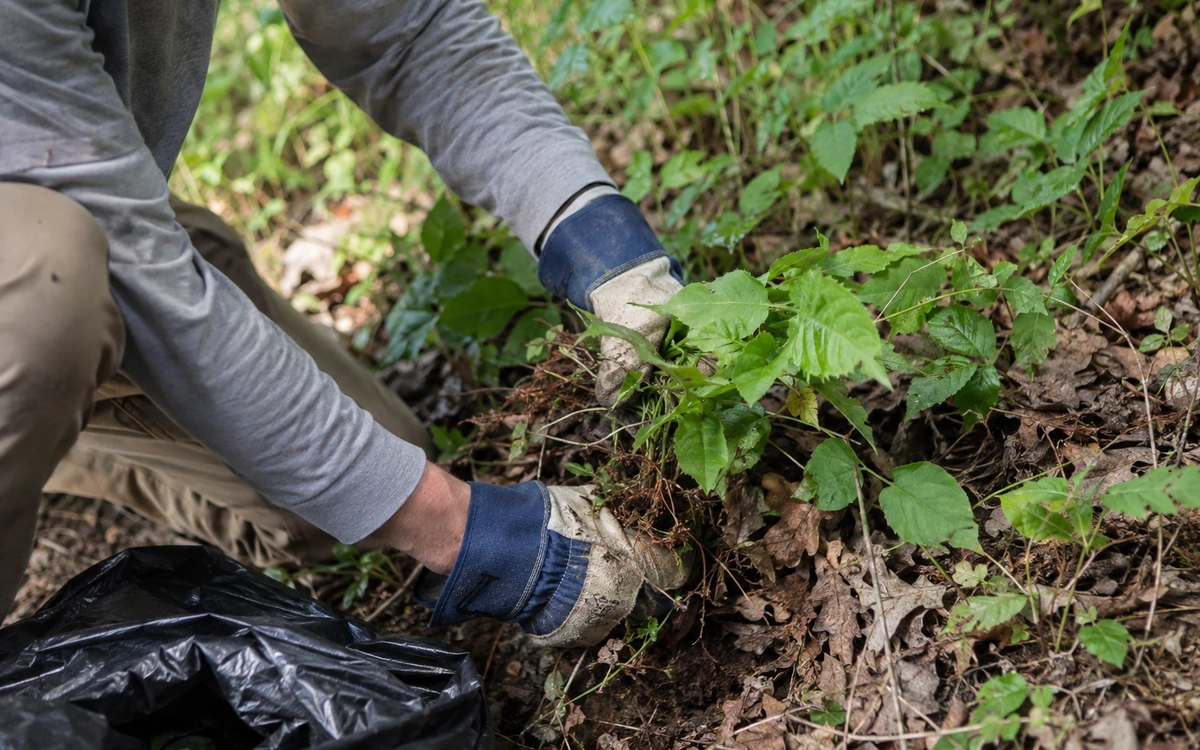
Mowing won't kill it, and it creates a new problem. Poison ivy spreads through creeping rhizomes just below the mulch layer, so a mower or string trimmer only clips the leaves while the roots keep feeding new growth. Shredding the plant also sprays sap-coated fragments onto your legs, the mower deck, and anything nearby. In a bed, the plant is either dug out, with the runners traced and lifted, or treated leaf by leaf with a targeted herbicide that spares the surrounding ornamentals. A follow-up check three to four weeks later catches any runners that were missed.
Why Do Rashes Keep Coming Back From Garden Tools and Gloves?
Urushiol doesn't break down quickly on hard surfaces. It's an oily resin that clings to steel blades, wooden handles, and cloth or leather gloves, and it can stay active for months or longer if nobody cleans it off. A quick soap-and-water rinse often just spreads it around, so tools should be scrubbed with a degreasing cleaner or rubbing alcohol, and sap-soaked gloves are usually best thrown out. Boot treads, wheelbarrow handles, and riding-mower steering wheels are the spots most often missed, and they keep the rash cycle going long after the plants are gone.
Does a Pet Bringing Home a Rash Mean the Poison Ivy Is Right Next to the House?
Not necessarily. Dogs and cats rarely react themselves because their fur shields their skin, but the oil rides on their coat and transfers to you when you pet them or they climb onto furniture. The patch could be anywhere along the animal's usual route: the back fence line, a wooded edge, or under a deck it crawls beneath. Walking your pet's regular path is usually how the hidden colony gets found. Until the area is cleared, bathe the animal with a dog-safe degreasing shampoo, wearing gloves.
If New Shoots Return Where Plants Were Already Pulled, Did the Removal Fail?
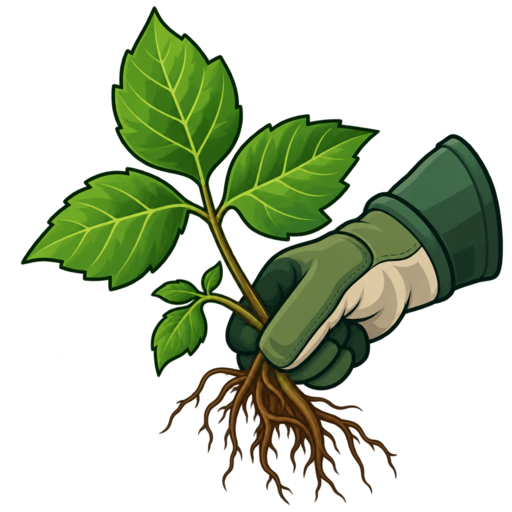
Not always. Hand-pulling almost always leaves broken rhizome pieces in the soil, and each fragment can send up new shoots within a few weeks, especially in moist spring weather. Some regrowth after a first pass is expected. The fix is to spot-treat the young shoots while the leaves are still tender and absorb herbicide well. Established patches usually need two or three rounds over a growing season before they stop coming back. Shoots that keep appearing far from the original patch usually come from seeds dropped by birds, not leftover roots, so that area needs to be monitored separately.
How Much Does Poison Ivy Removal Cost in Omaha, NE?
Poison ivy removal in Omaha, NE typically costs $302 to $1,766. A small patch in a mulch bed sits at the low end, while a yard with several established colonies lands near the top. Three factors move the price most: how many thick, woody vines must be cut and stump-treated on tree trunks, how far the rhizomes have spread through groundcover, and whether the debris has to be bagged and hauled away. Expect to pay more for patches that need two or three follow-up herbicide treatments over the season.